
Azores with Kids: Is It Worth It? Our Real São Miguel Itinerary
This post may contain affiliate links — if you book through one we may earn a small commission, at no extra cost to you.
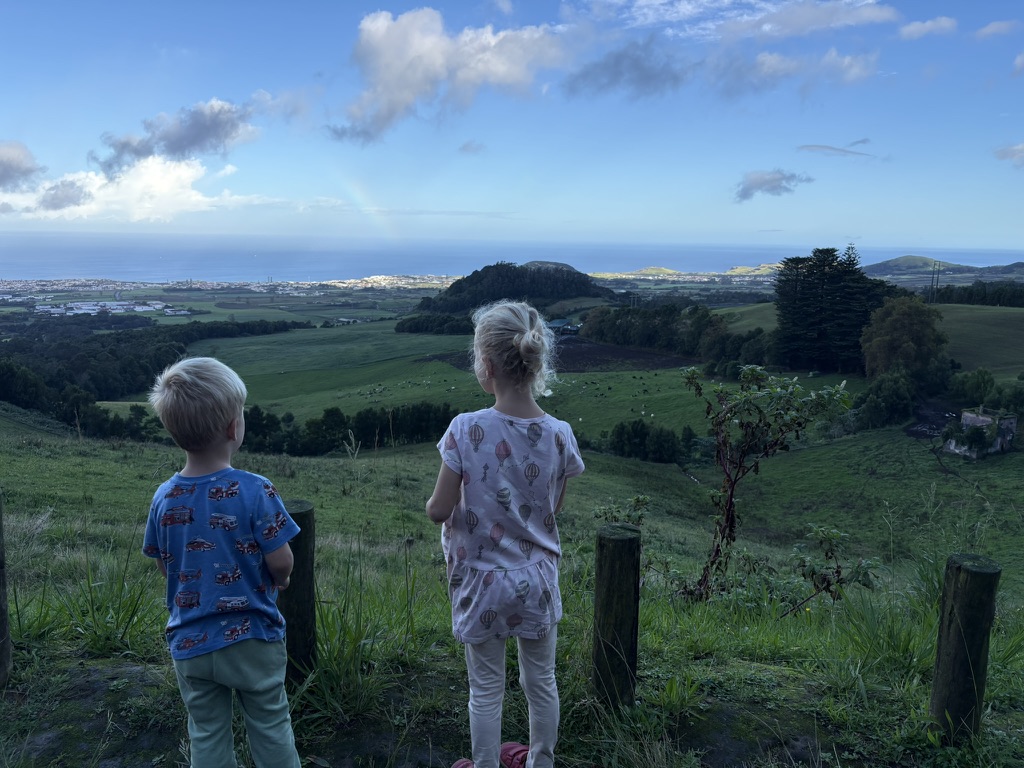
We went in mid-October, mostly to escape the weather turning cold at home. Flew with TAP Air Portugal, with a stopover in Lisbon — and for a first Azores trip, we kept it simple and stayed on São Miguel, the main island. No regrets on that choice; there was more than enough for one trip.
Is the Azores worth it with kids? Yes — but go in with the right expectations. You could build a beach-resort-and-pool trip here in summer, but that’s not really what the islands are for — there are better spots in Europe for that. What you’re actually signing up for is volcanoes, waterfalls, and a lot of driving between them, with kids who are old enough to handle some walking on uneven ground. Ours were 3 and 5, and they were completely won over by anything volcanic — which, as it turns out, is most of the island.
Azores (São Miguel) with Kids at a Glance:
- What it is: a volcanic island in the mid-Atlantic — hot springs, caldeiras, waterfalls, and dramatic coastline
- Good for: kids around 3+ who can manage uneven paths and some walking; less ideal for stroller-only ages
- Getting there: TAP Air Portugal, typically via a Lisbon stopover
- You’ll need: a rental car — there’s no realistic way to see the island without one
- Base yourself: Ponta Delgada — walkable, minutes from the airport
- Don’t skip: whale watching from Ponta Delgada harbor — we did, and we regret it (more on that below)
Getting There and Getting Around
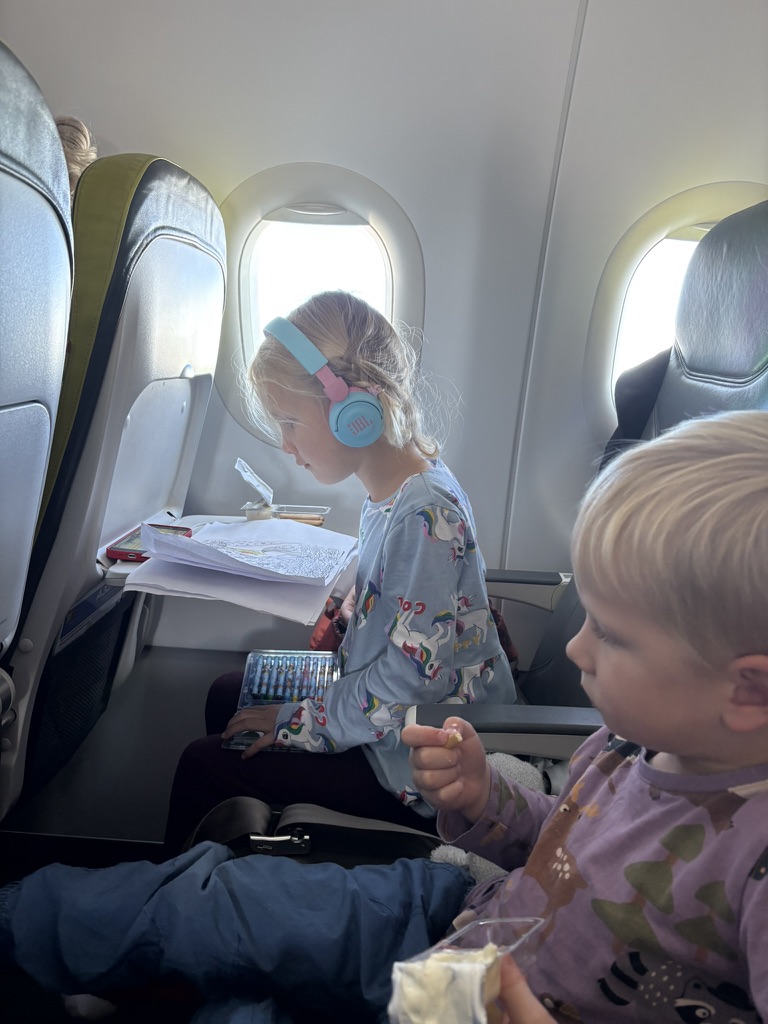
We flew TAP Air Portugal with a stopover in Lisbon on the way in, which is the normal routing for the Azores from most international departure points — TAP has by far the most connections through its Lisbon hub. Both kids had done long flights before, so coloring books, headphones, and snacks got us through the connection without drama.
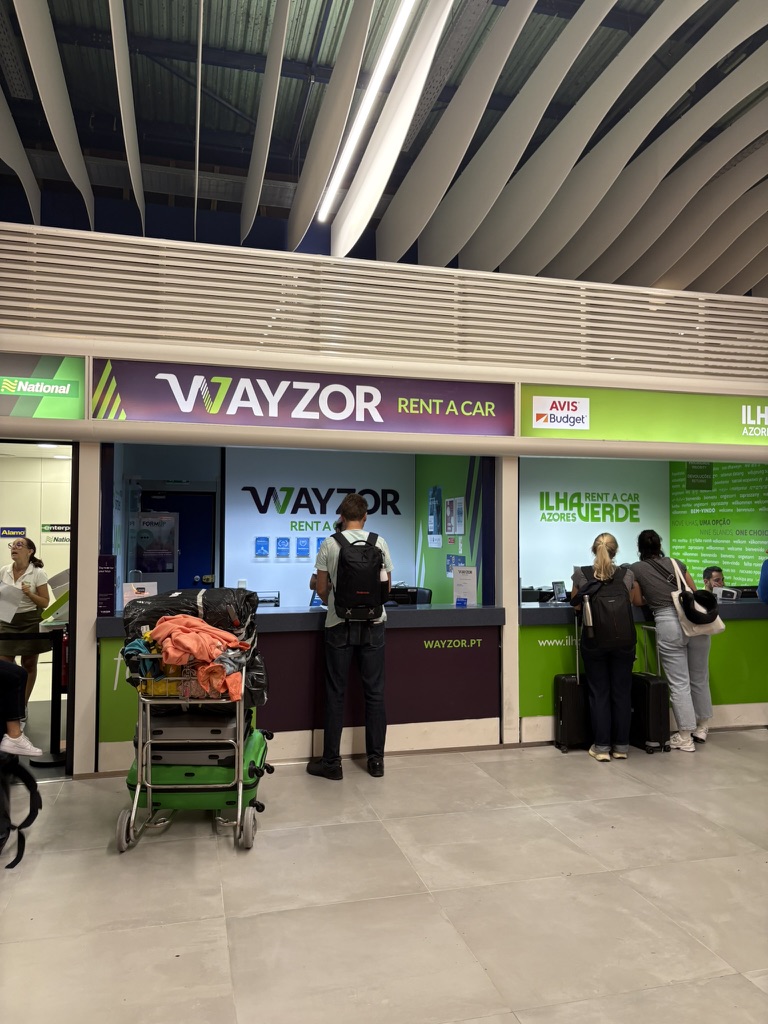
You need a car. São Miguel’s attractions are spread right across the island, and there’s no practical way to string together a day like Furnas-then-Terra-Nostra, or a coastal drive past three or four viewpoints, without your own wheels. We rented directly at Ponta Delgada Airport with a local company, Wayzor — the line at their desk was noticeably shorter than the international chains, and the price-to-car-quality combination was the best we found. If a short airport queue and a decent car matters to you as much as it did to us with two tired kids off a long flight, it’s worth comparing.
Where We Stayed: Ponta Delgada
We based ourselves in Ponta Delgada, a few minutes from the airport, and it was an easy call to make again. Our building had a small grocery store right downstairs, with restaurants and shops within easy walking distance in every direction — convenient with kids, since it meant we could grab breakfast supplies or a quick dinner without loading everyone back into the car at the end of a long day out.
Day 1: Furnas — Bubbling Mud, Warm Springs, and an Honest Take on Cozido
First full day, and the kids had one request: anything volcanic. Furnas delivered.
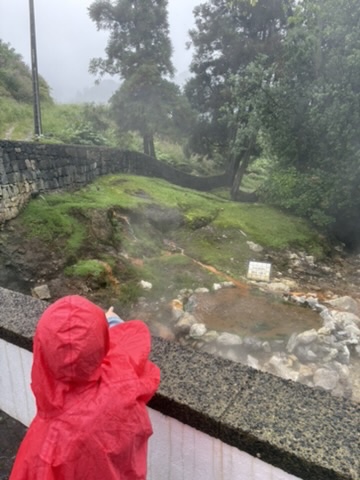
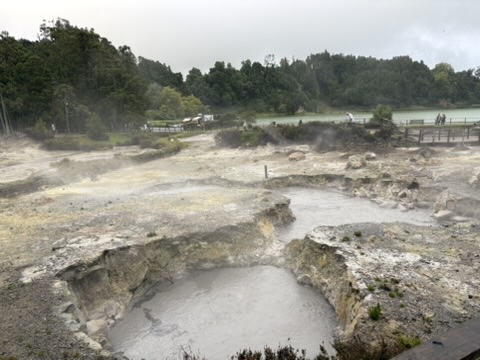
The weather wasn’t great — we ended up pulling out the umbrellas — but the Furnas caldeiras were worth it even in the rain. Bubbling, muddy pools and small geysers dot the area, and our kids spent ages dipping their hands in different spots, feeling how the water temperature changed depending on how close each pool was to the volcanic activity underneath. It’s the kind of hands-on natural phenomenon that holds a 3 and 5 year old’s attention far longer than you’d expect.
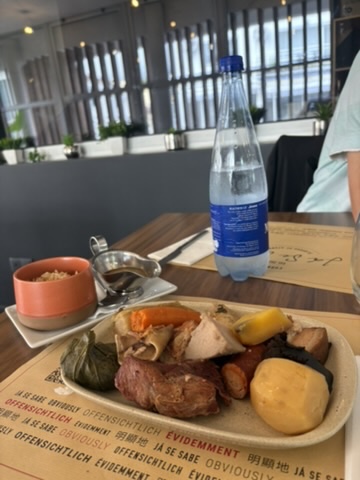
We also tried the local tradition: cozido das Furnas, meat and vegetables slow-cooked for hours in the heat of the volcanic ponds themselves — several nearby restaurants serve it, and you can watch pots being lowered into the ground before you eat. It’s a genuine experience and worth doing once. Just don’t go in expecting the best meal of the trip, because it won’t be.
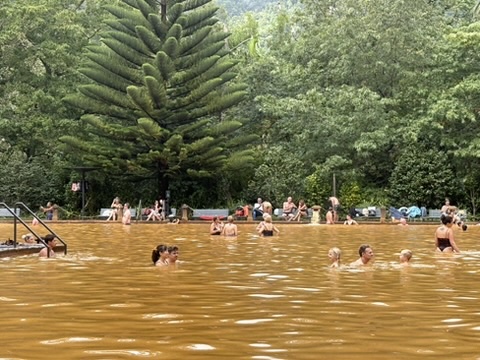
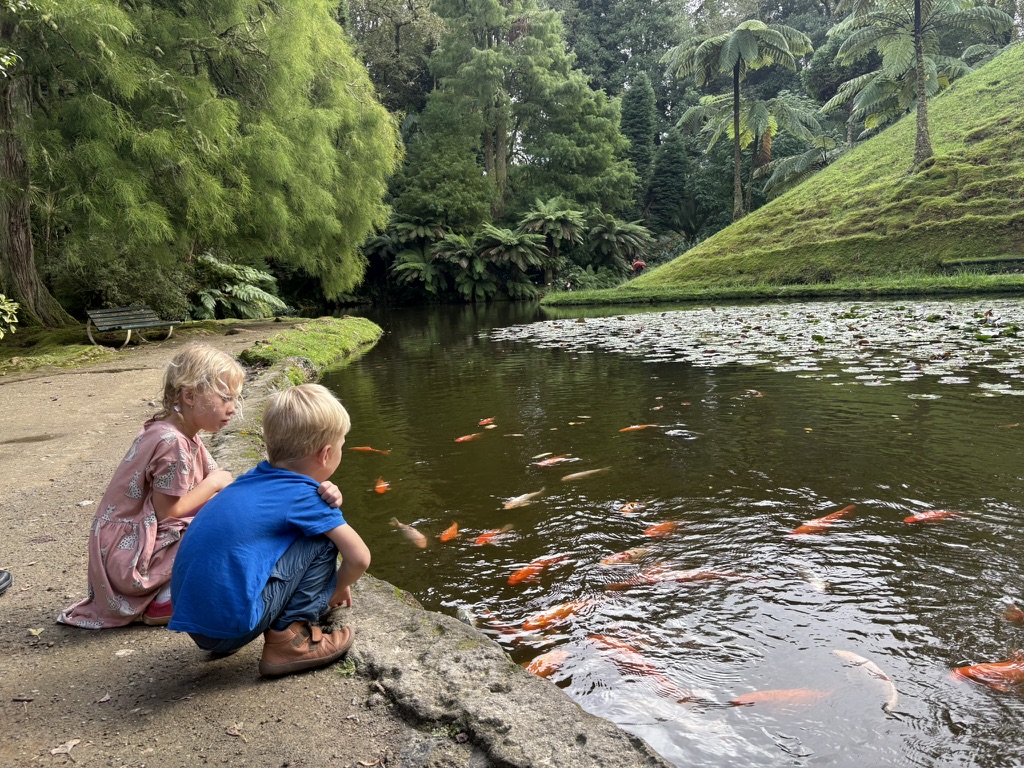
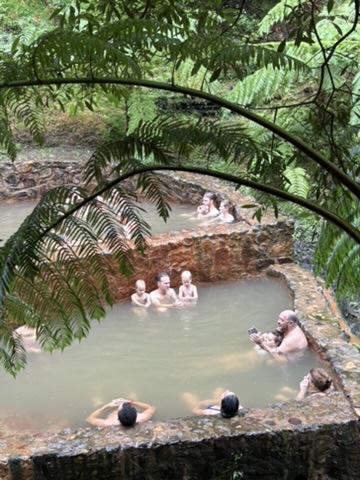
The weather cleared up enough by the afternoon for us to head to Parque Terra Nostra, where you can swim in the park’s famous brown thermal pools — mineral-stained but warm, and swimmable even with a fair number of people around. It wasn’t overcrowded by any means, and we followed up the swim with a walk through the rest of the park.
Day 2: Sete Cidades, Mosteiros, and the Coast at Ponta da Ferraria
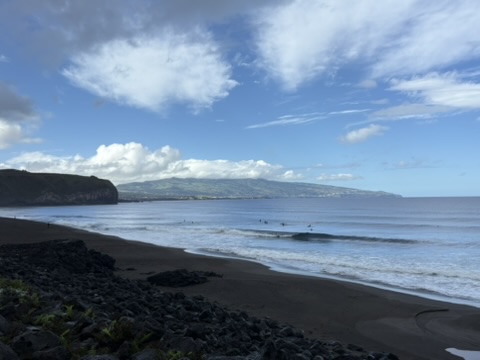
Day two was all coastline. We started at Sete Cidades, walking around the lake, before driving on to Mosteiros, where black volcanic cliffs drop straight into a churning sea — waves breaking hard enough that our photos undersell what it actually looked like standing there.
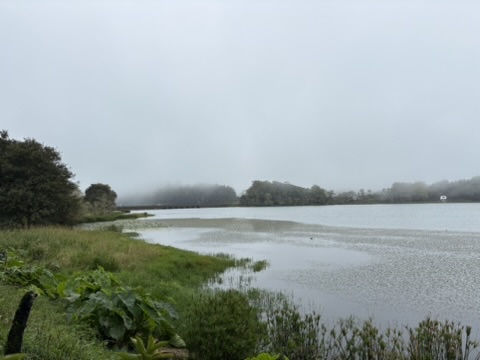
One honest caveat: we were unlucky with the weather here. A thick fog sat over the central part of the island for our entire visit, so we missed the classic panoramic views over Sete Cidades’ twin lakes that the photos everywhere promise. It’s worth checking the forecast and, if you can, saving this viewpoint for a clearer day.
There’s a black sand beach at Mosteiros too. It was very windy — t-shirt weather, but not swimming weather — so we admired it rather than got in.
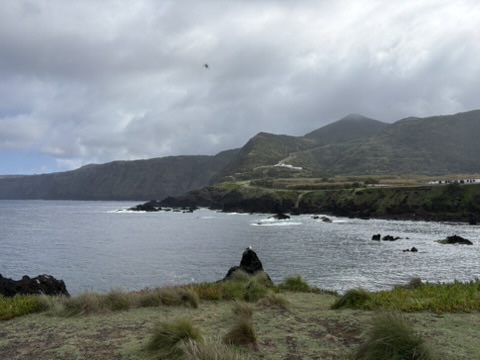
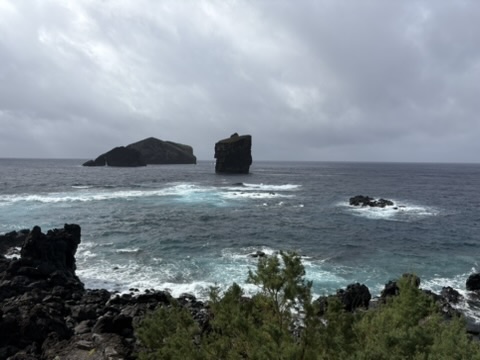
From there we drove the coast road back around, stopping at Ponta da Ferraria. Getting down to the water involves a fair amount of walking, made harder by a stretch of broken road — the kids managed it fine, but it’s worth knowing in advance if you’ve got a stroller or a reluctant walker. Once down at the coast, the sea was too rough for the kids to swim safely, so that one stayed a lookout stop rather than a swim stop.
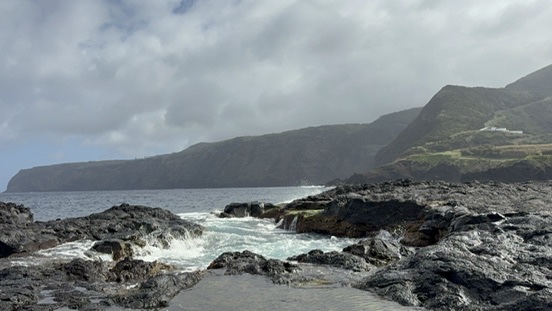
Day 3: Porto Formoso, Ribeira dos Caldeirões, and More Furnas
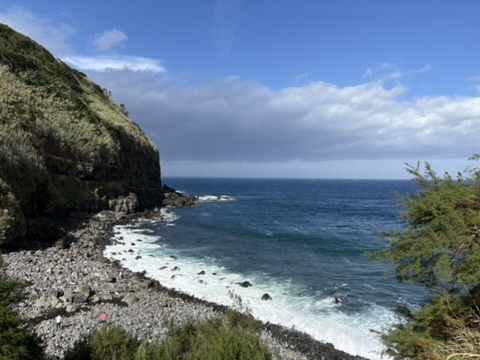
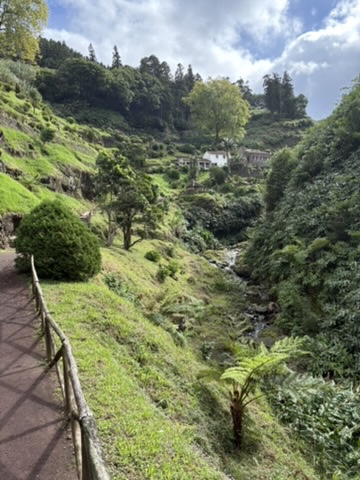
We spent day three working our way along the north coast, stopping for viewpoints at Porto Formoso before reaching Parque Natural da Ribeira dos Caldeirões — ocean-coast viewpoints on the way in, then a waterfall and views over the valley inside the park itself, reached by a short walk up and down that the kids managed without complaint.
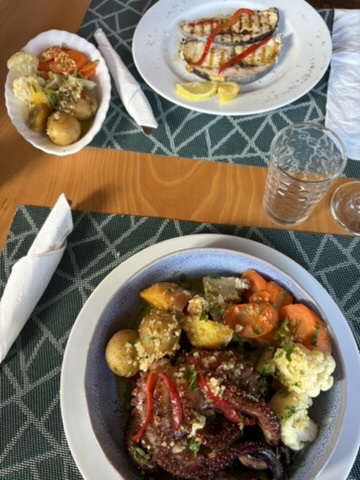
One thing we forgot to mention until now: octopus is everywhere on São Miguel, and it’s cheap, soft, and delicious — a world away from the chewy version you might be used to. It turned up on menus constantly and never once disappointed.
On the way back we swung through another part of Furnas we’d missed the first time around — more caldeiras to poke at. There’s honestly never too many volcanoes.
Day 4: Pineapple Plantation and a Tea Maze
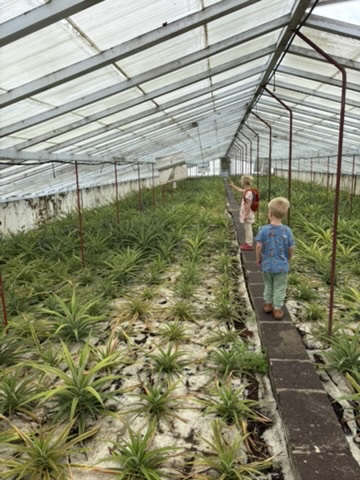
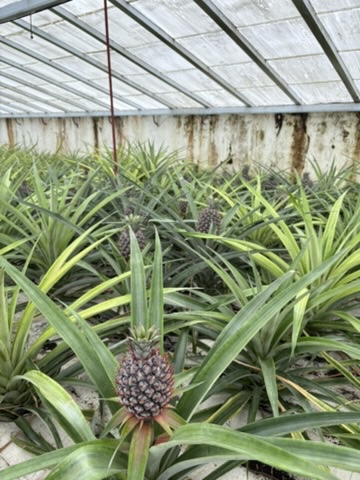
Day four was the low-effort, high-reward day. We drove to the Plantação de Ananás dos Açores — walking there would have been too far for the kids — and they loved it, especially the tastings.
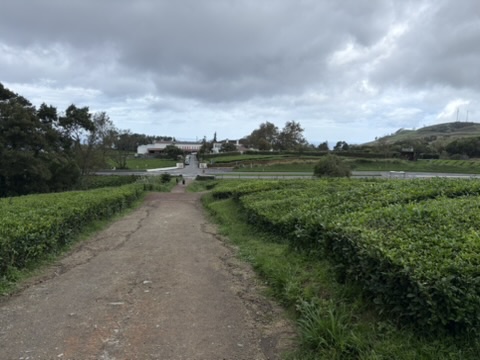
From there we headed to a tea plantation in Ribeira Grande, where you can sit down for a cup worth lingering over, alongside sweets and small snacks for the kids. There’s a tea maze on the grounds too, and ours spent a happy stretch just running through it.
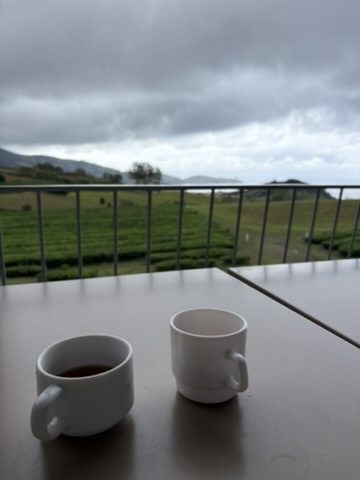
We ended the day at a viewpoint over the island as the light faded, with a faint rainbow arcing over the valley below — the kind of stop you don’t plan for and can’t really schedule around.
Day 5: Caldeira Velha and the One Thing We Should Have Done
Nothing beats swimming, so we started the day at Caldeira Velha for another round in the warm volcanic pools. It rained a little again — though you barely notice once you’re already soaked and warm in the water. Entry is ticketed for specific time slots and they do enforce it, which kept the crowds manageable.
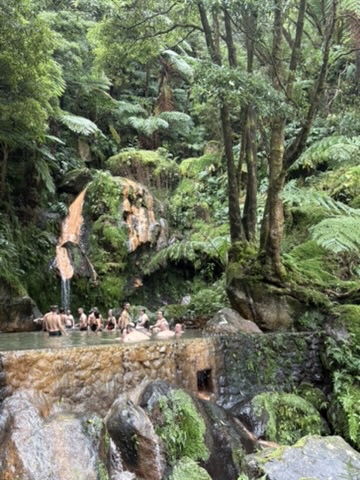
Our 3 and 5 year old were both happy paddling around in it alongside the adults.
We spent the afternoon walking along the coast near Ponta Delgada, close to where the whale-watching tours depart from — and this is the one regret of the trip. We skipped it, purely because we’d done whale watching on a previous visit. In hindsight, we should have gone anyway — São Miguel sits close to resident whale and dolphin populations, and local operators routinely advertise sighting rates above 95%, so doing it again with the kids at these ages would have been worth the repeat. If you’re planning your own trip, don’t make our mistake — the 3-hour whale and dolphin watching trip from Ponta Delgada on GetYourGuide is the one we’d book.
Tips for Visiting the Azores With Young Kids
- Rent a car at the airport. There’s no other realistic way to cover the island.
- Pack for rain regardless of season. We had umbrellas out more than once in October, even on otherwise good days.
- Prioritize the thermal pools for swimming. Terra Nostra and Caldeira Velha are warm and swimmable whatever the weather; the open sea is a different story.
- Check ticketed time slots at Caldeira Velha — they enforce entry windows, which actually works in your favor for crowd levels.
- Don’t skip the whale watching. Tours leave right from Ponta Delgada harbor — book ahead.
- Expect walking on uneven ground at coastal viewpoints like Ponta da Ferraria — fine for our 3 and 5 year old, but worth knowing if you’ve got a stroller-age child.
Our Verdict
Worth it, with the caveats above: rent the car the moment you land, pack for rain regardless of the forecast, and don’t talk yourself out of the whale watching like we did.
What stuck with our kids wasn’t any single stop — it was getting to touch bubbling mud, swim in warm pools whatever the weather was doing, and stand at the edge of coastline that behaved nothing like anything at home. Base yourself in Ponta Delgada, and build the week around Furnas, Sete Cidades, and the thermal pools.