Before we left, I was bracing for our four-year-old. He’s the cautious one — new food is a hard sell even at home, and I expected Korea to be a daily negotiation. He surprised us. It was our six-year-old, normally up for anything, who struggled: not because the food was unfamiliar, but because she kept getting caught out by spice in dishes that looked completely safe.
Here’s the real version. Our kids (4 and 6) did eat well, and both became genuinely obsessed with dumplings. But we also leaned hard on a small rotation of safe meals, dodged more spice than the guidebooks warn you about, and were very glad bakeries and McDonald’s exist. If your kids are generally adventurous, spice is the thing to manage. If they’re cautious about new food full stop, this rotation is what actually worked for us.
The honest short answer: your kids won’t go hungry, but don’t assume “mild.” Spicy red sauce shows up everywhere, including in dishes aimed at children. Build your days around the reliable wins — dumplings, katsu, BBQ, rice, bakeries — and keep a Western backup in your back pocket. If you’re still planning the trip itself, our 10-day South Korea itinerary with kids covers the whole route.
Spice Was Our One Real Challenge
Let’s start with the hard part, because nobody warned us properly. Korea puts spicy red sauce (gochujang) in more things than you’d think — and crucially, “kids’ meal” does not reliably mean mild. Our daughter is very sensitive to even a hint of heat, and she ran into spicy sauce in places we didn’t expect, including dishes that looked completely child-friendly.
That’s the thing to internalise before you go: you can’t assume. You have to check, ask, and have a fallback.
What got us through:
- Assume red means spicy. Brown, beige, and clear-broth dishes were almost always safe; anything coated in red sauce usually wasn’t.
- Ask, every time. “An maewoyo” (안 매워요 — “not spicy”) is worth learning, but even then, double-check a child’s portion before handing it over.
- Don’t trust the kids’ menu blindly. More than once the “children’s” option arrived with a spicy element. We learned to ask specifically.
- Have a safe rotation ready. Once we knew which dishes were reliably mild, we just repeated them. Variety came second to a kid who’d actually eat.
Honest tip: if you’ve got a genuinely spice-sensitive child, plan for a short list of go-to meals rather than expecting them to eat broadly. It’s far less stressful.
Our Safe Rotation: What They Actually Ate
This was our short list — the meals we came back to again and again because we knew they worked.
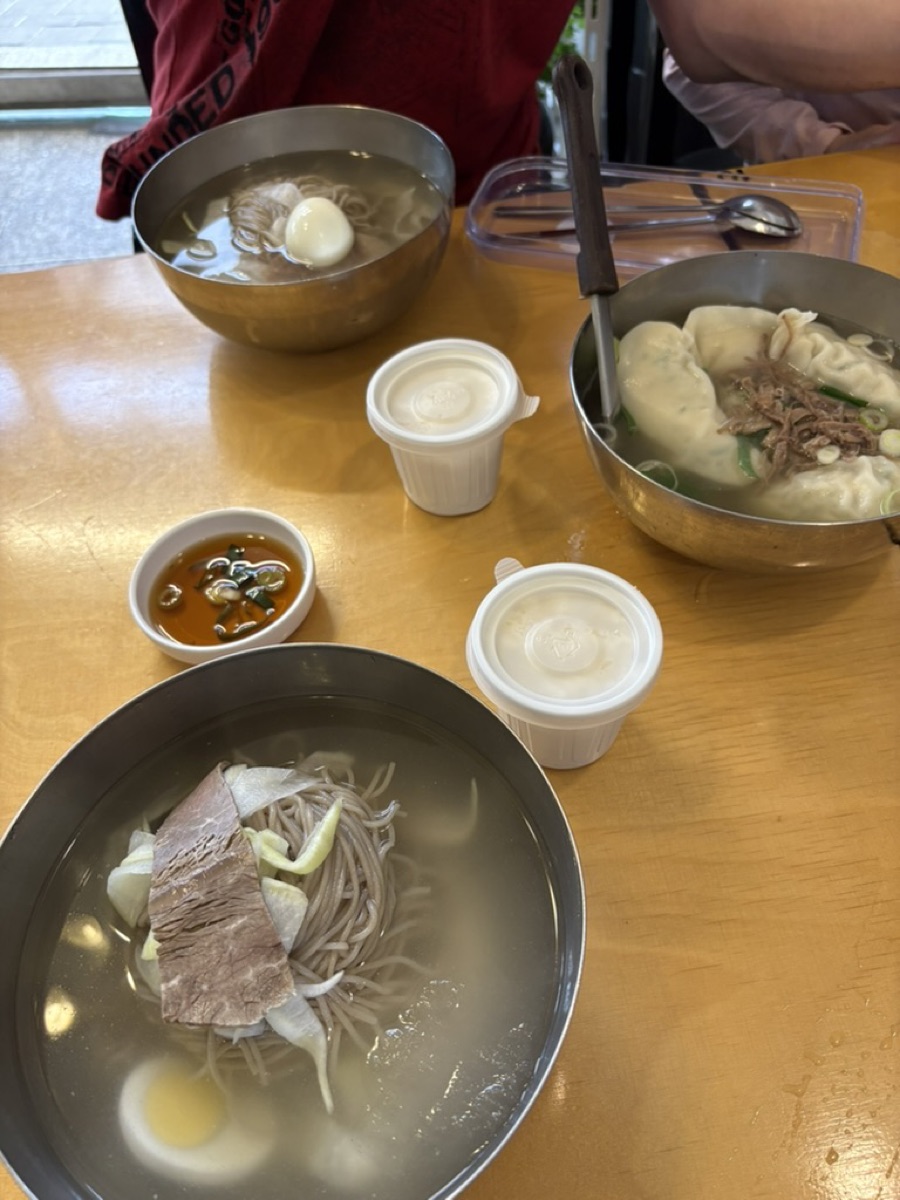
- Dumplings (mandu) — the runaway winner, and the one food both kids asked for daily. We had them everywhere: in clear soup, steamed, fried, from street stalls. They’re naturally mild, filling, and endlessly available. If your kids like dumplings, Korea will feed them happily.
- Katsudon / katsu — a breaded, fried pork cutlet, served on rice (katsudon) or alongside it. Mild, familiar, and a reliable fallback our two never turned down.
- Tuna-mayo gimbap — rice and tuna-mayo rolled in seaweed. Mild and portable, though watch which variety you grab (more on that below).
- Korean BBQ — grilled meat at the table, mild and a brilliant experience with kids. Its own section below.
- Bibimbap — a surprise hit, sort of. Neither kid touches the vegetable toppings — those get picked off or pushed aside — but the rice, the meat, and the sauce it’s all mixed in were an easy win. It stuck: we still order it at Korean restaurants back home in Prague.
- Plain rice — never underestimate it. A bowl of rice plus any mild protein was a complete, accepted meal on the tough days.
Korean BBQ with Young Kids
Korean BBQ was one of our best meals of the trip, and far less of a gamble than I’d feared. You sit around a built-in grill, raw meat arrives, and you cook it at the table — which sounds chaotic with kids and instead turned out to be the opposite.
Our two were old enough (4 and 6) to find the sizzling, tabletop drama exciting rather than scary, and the meat vanishes fast when everyone’s leaning in to help. The meat itself is mild, so there’s nothing to navigate — just ask for plain rice and a plate of lettuce leaves for wrapping, and keep the spicy dipping sauces at the far end of the table.
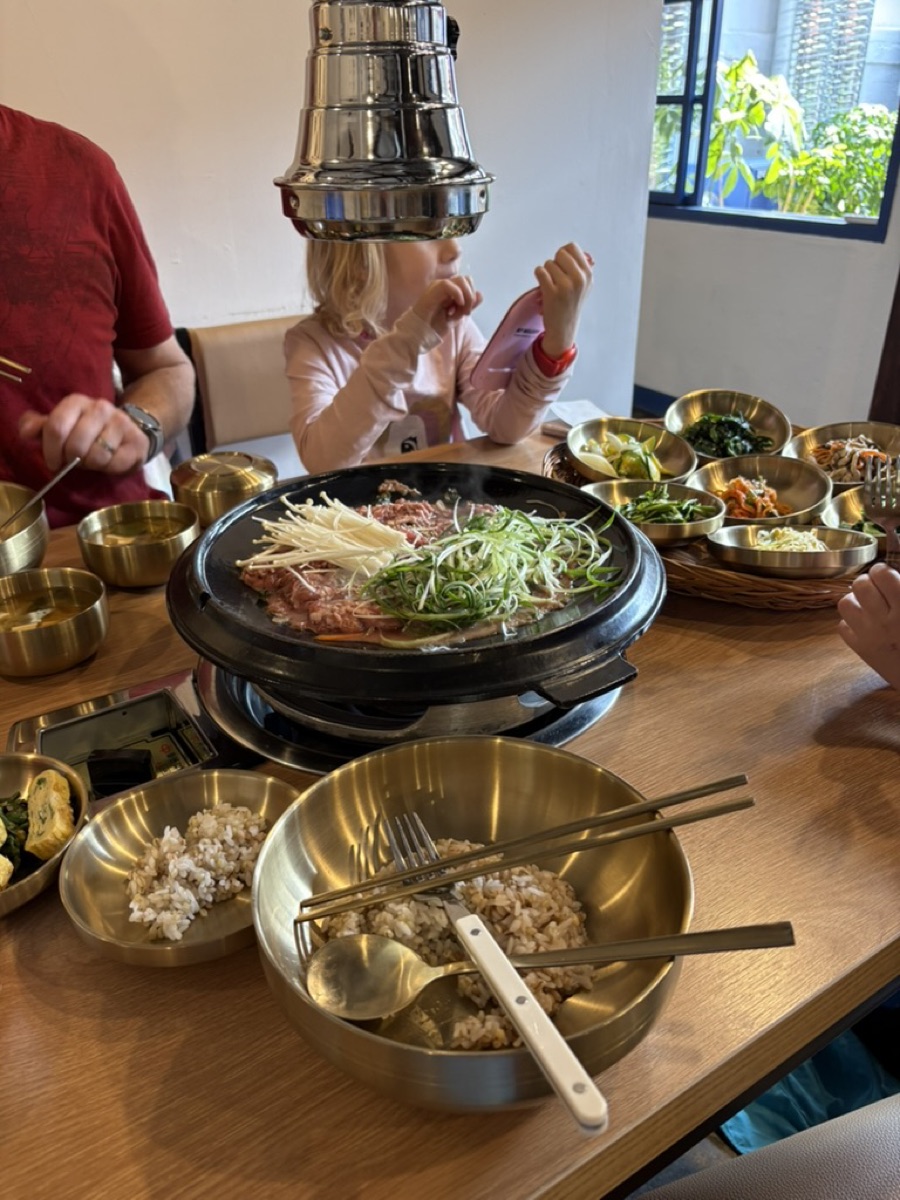
Tip: go when the kids are hungriest. An empty stomach plus the novelty of grilling their own food bought us a remarkably calm, engaged meal.
Bakeries: The Unexpected Hero (with One Warning)
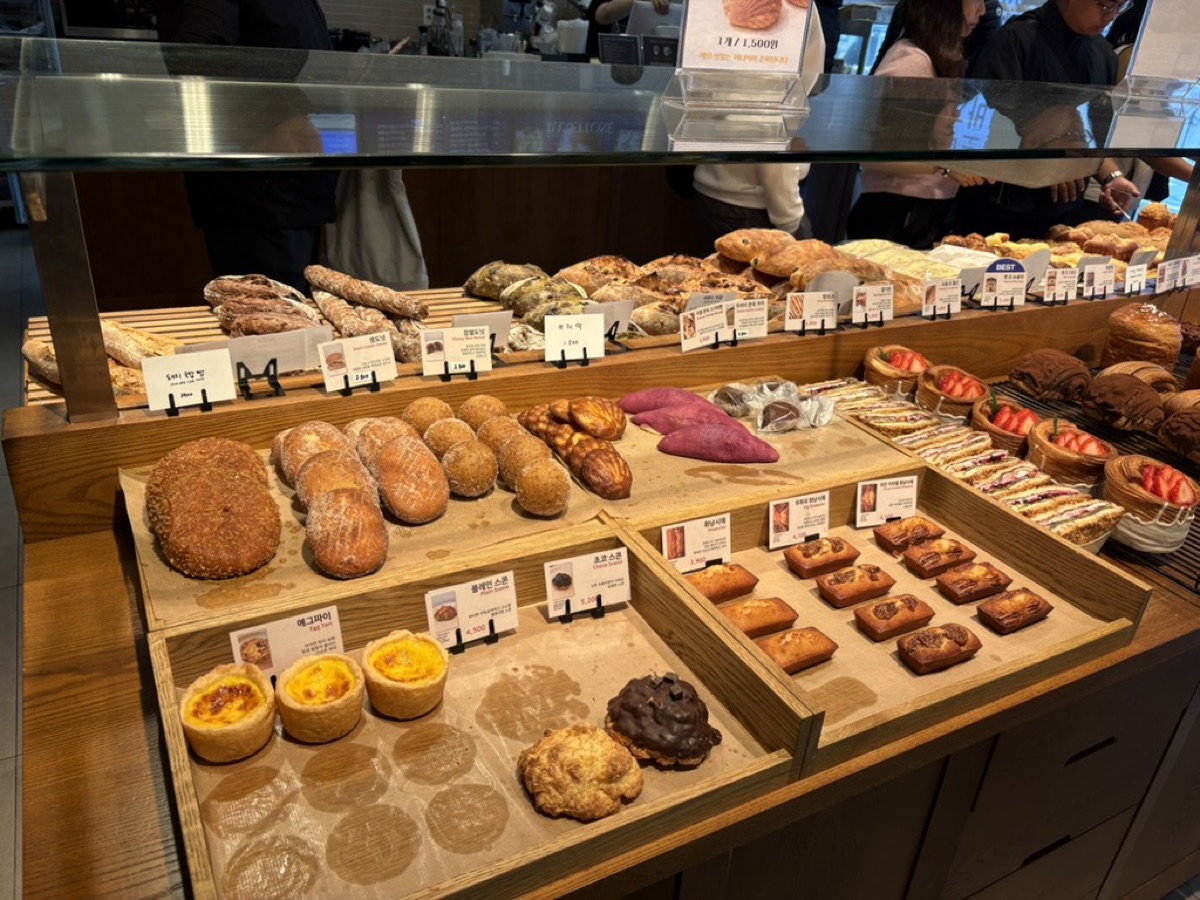
Nobody told us how much Korea would run on bakeries, and they quietly became our secret weapon. There is a gorgeous bakery roughly every fifty metres, the pastries are excellent, and our kids lit up every single time we walked into one. On a rough food day, a bakery was an instant reset.
One honest warning, though: the fillings aren’t always what a Western kid expects. Our two once excitedly picked out what looked like a normal cake, only to find it filled with sweet potato — and another time a chewy, glutinous filling (think red bean or mochi-style) that tasted “wrong” to them and got rejected on the spot. It’s not a problem, just something to expect. Point at the plainer breads, custards, and fruit-topped options, and steer clear of the purple and the suspiciously dense ones unless your kids are game.
The Western Backup (No Guilt)
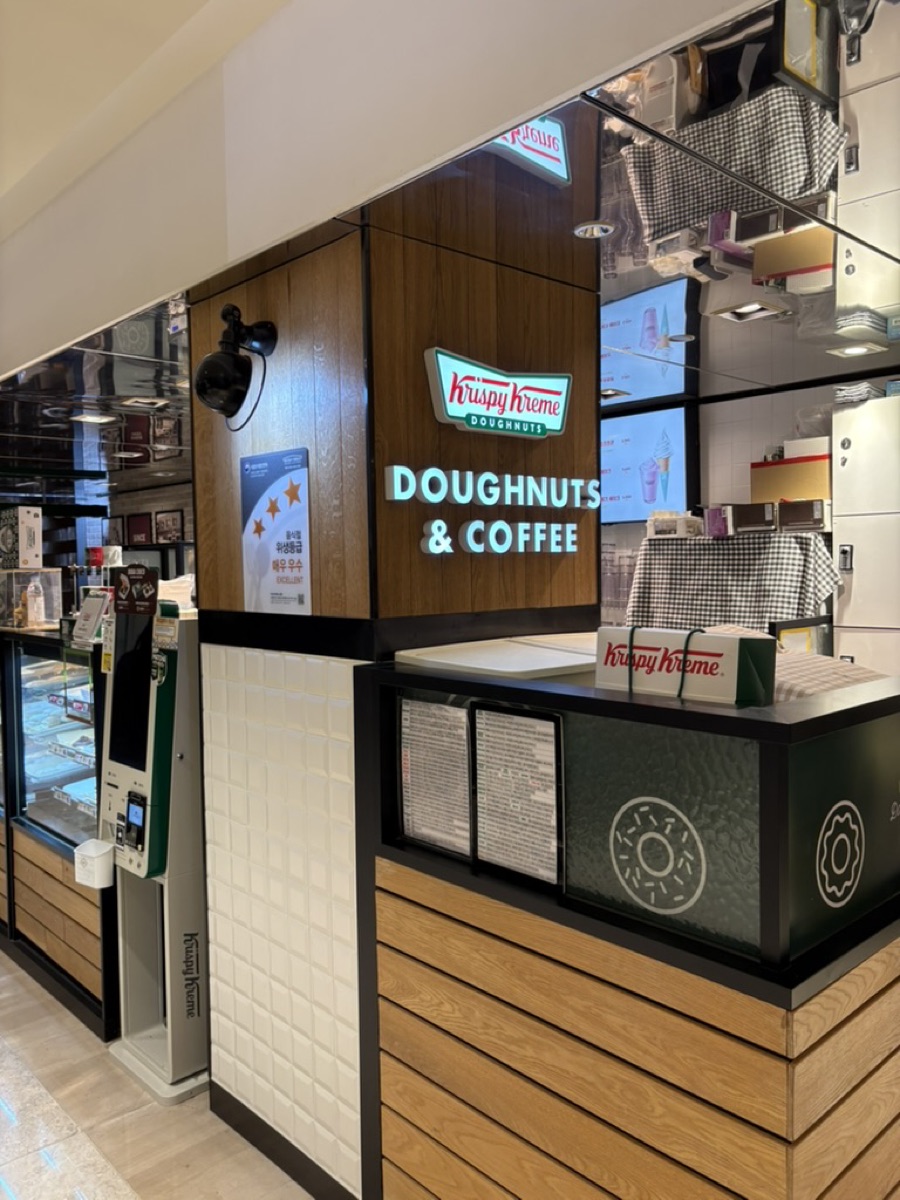
Some days you just need a guaranteed win, and Korea makes that easy. McDonald’s, Krispy Kreme, and familiar chains are everywhere, especially in Seoul, and we used them without a shred of guilt when the kids were tired and we needed everyone fed without a negotiation.
One warning, though: don’t assume “pizza” is automatically a safe bet. We ordered pizza in Busan expecting an easy win, and it wasn’t — the dough was made from a different flour than Western pizza, and the toppings, cheese, and sauce were distinctly Korean rather than what our kids were picturing. Neither of them ate more than a bite. If you want pizza as a genuine fallback, look for an actual Western chain branch (Pizza Hut, Domino’s, and similar are around, especially in Seoul) rather than a local pizzeria — the name alone isn’t a guarantee.
It’s worth knowing this going in — it takes the pressure off. You are never far from something your child will definitely eat, which makes it much easier to be adventurous the rest of the time.
Street Food and Night Markets
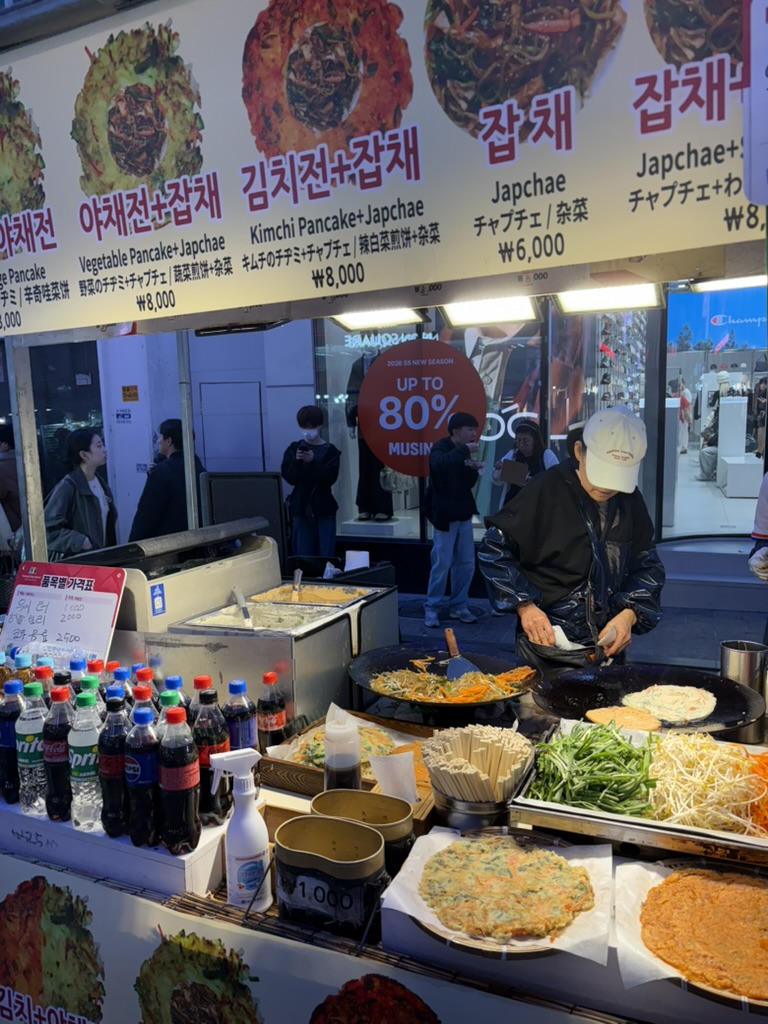
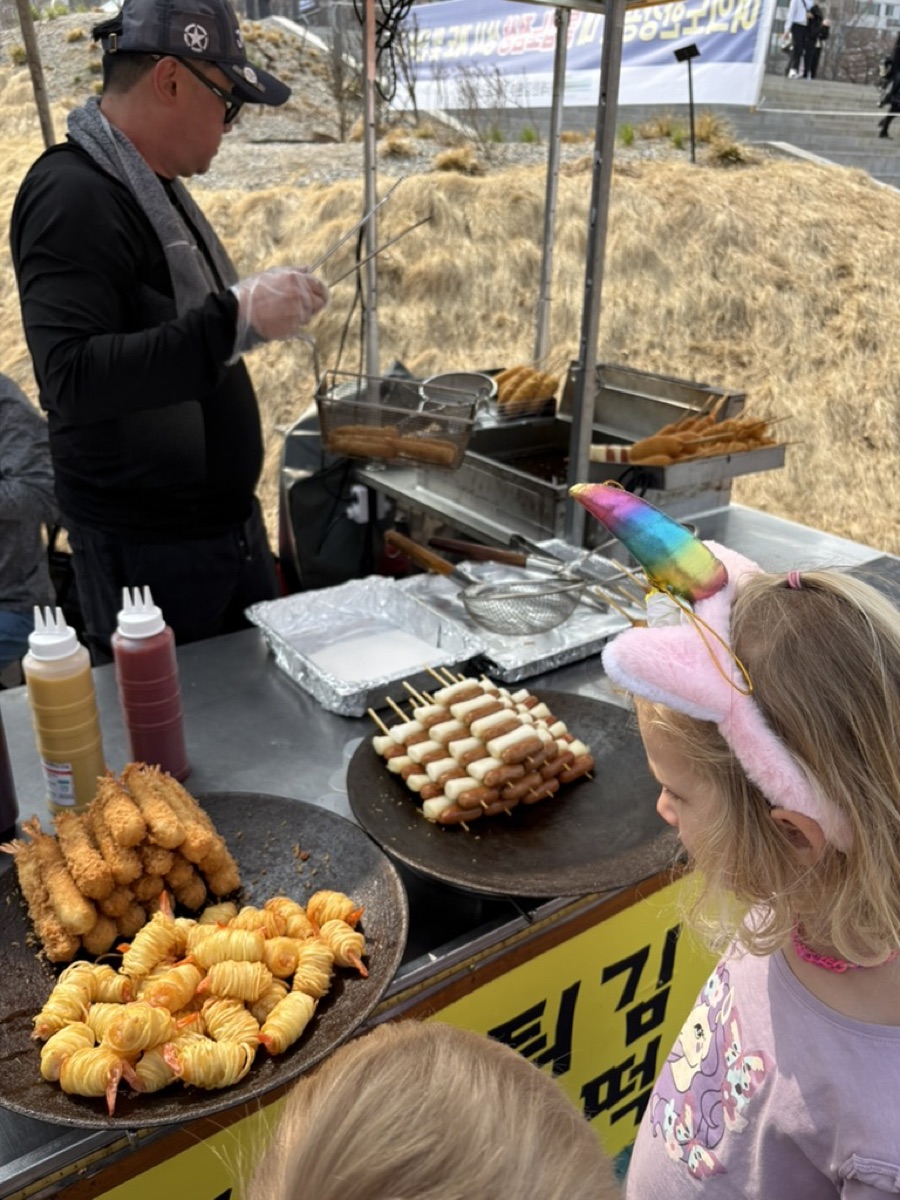
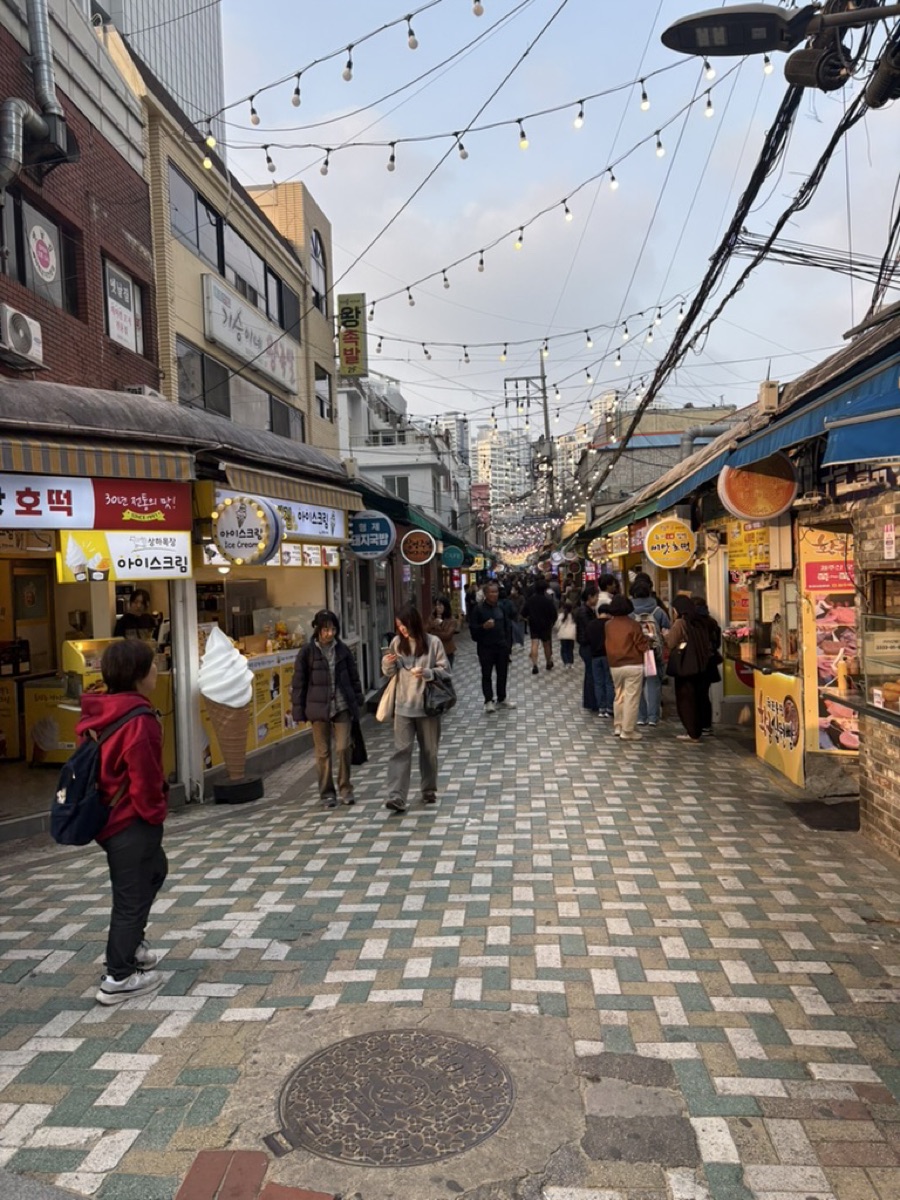
This is where Korea is genuinely brilliant with kids — the eating becomes the entertainment. You wander, point, and graze, and nobody has to sit still at a table. It’s also where the dumpling supply never runs dry.
- Skewers and fried snacks — sausage-and-rice-cake skewers (sotteok sotteok), tempura, and fried odds and ends. Mild, fun, and handed over on a stick, which small kids love.
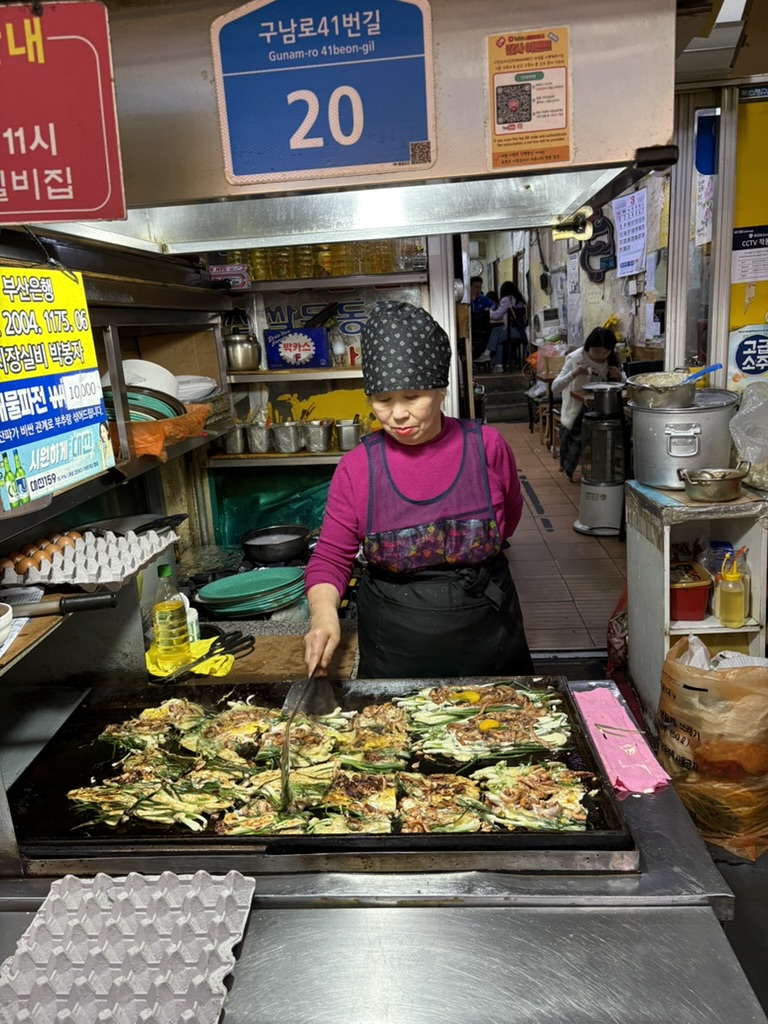
- Pajeon — a crisp, savoury pancake, completely mild and an easy crowd-pleaser.
- Hotteok — a sweet, syrup-filled griddle pancake; the perfect bribe for a flagging toddler.
- Dumplings, again — street stalls steam them by the basket, and they were our reliable on-the-go meal.
Just keep the spice rule in mind: the bright-red tteokbokki (spicy rice cakes) is a street-food staple and a firm no for sensitive kids.
Convenience Stores Are Your Daily Backup
Do not underestimate the Korean convenience store. GS25, CU, and 7-Eleven are on practically every corner, spotless and cheap, and they bridged a lot of gaps for us.
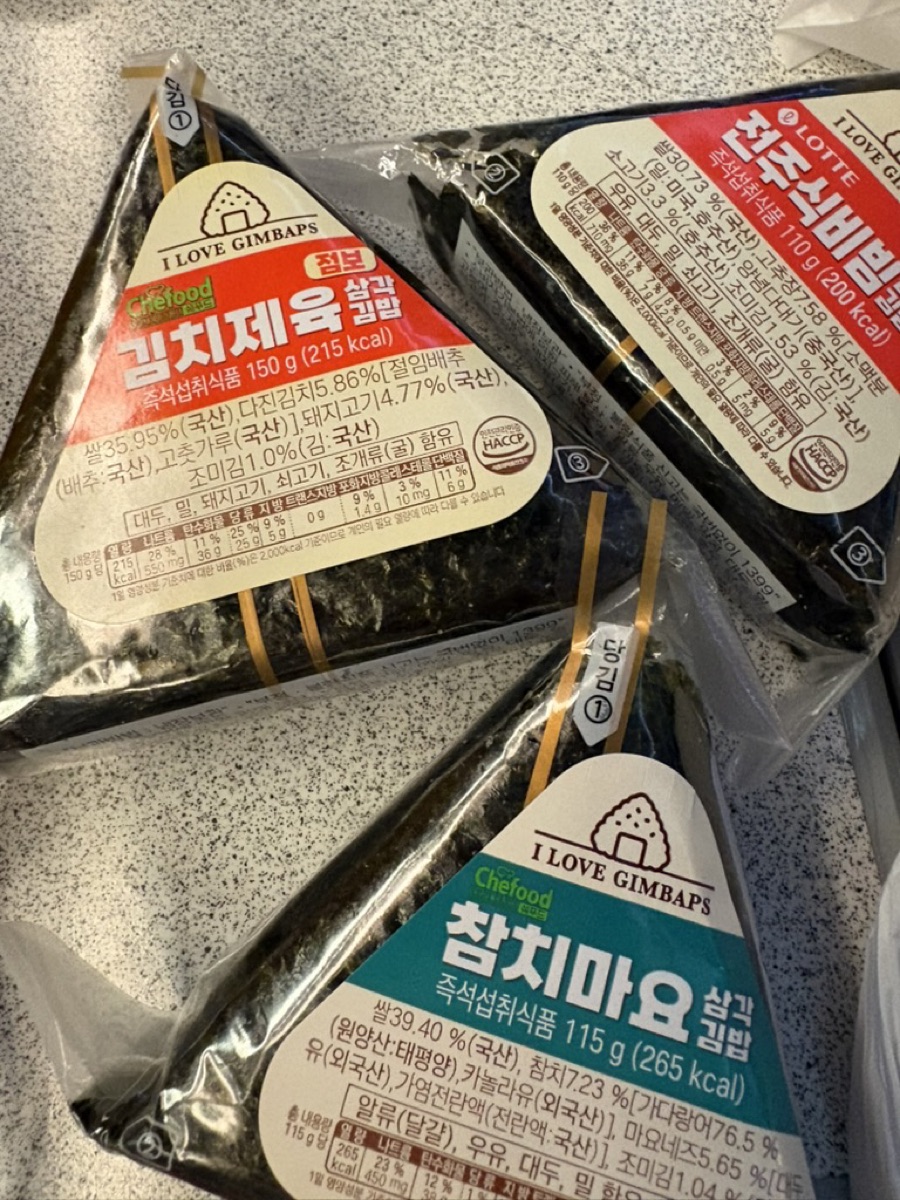
The catch: read the labels. Not every triangle rice ball (samgak gimbap) is mild — the kimchi and spicy-pork fillings are everywhere. Our safe pick was tuna-mayo (chamchi), which both kids happily ate, alongside:
- Plain gimbap rolls and sandwiches — easy, familiar, portable.
- Bakery and fruit — pastries, bananas, yoghurt drinks, milk.
- Mild instant noodles — most stores have hot water and a counter; just avoid the spicy varieties.
Tip: grab a T-money card at the same convenience store on arrival — it pays for the metro and buses, and you’ll be back in these shops daily anyway.
Cafes and Sweet Treats
Korea’s cafe culture was a genuine secret weapon for us. There’s a beautiful, calm cafe roughly every fifty metres, and a cake-and-drink stop bought a surprising amount of goodwill before the next round of sightseeing.
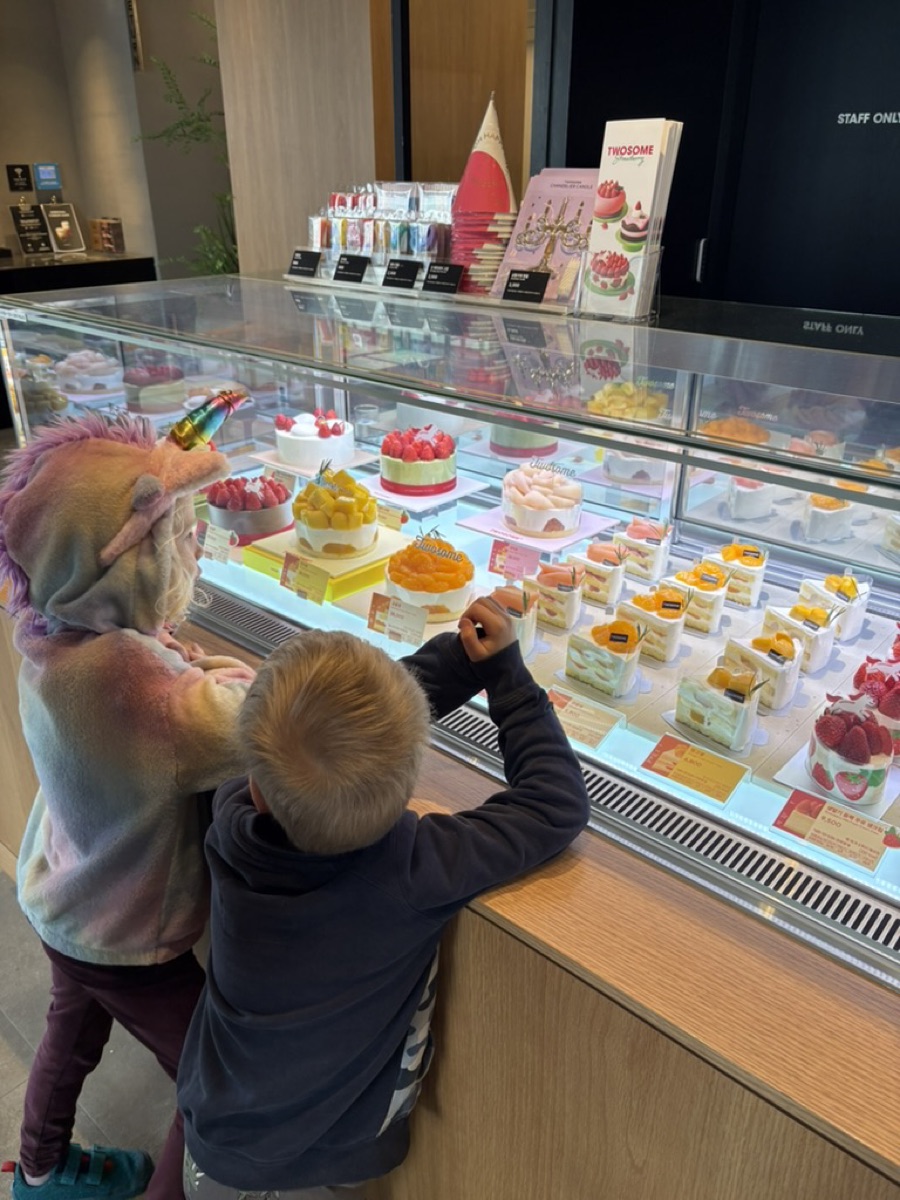
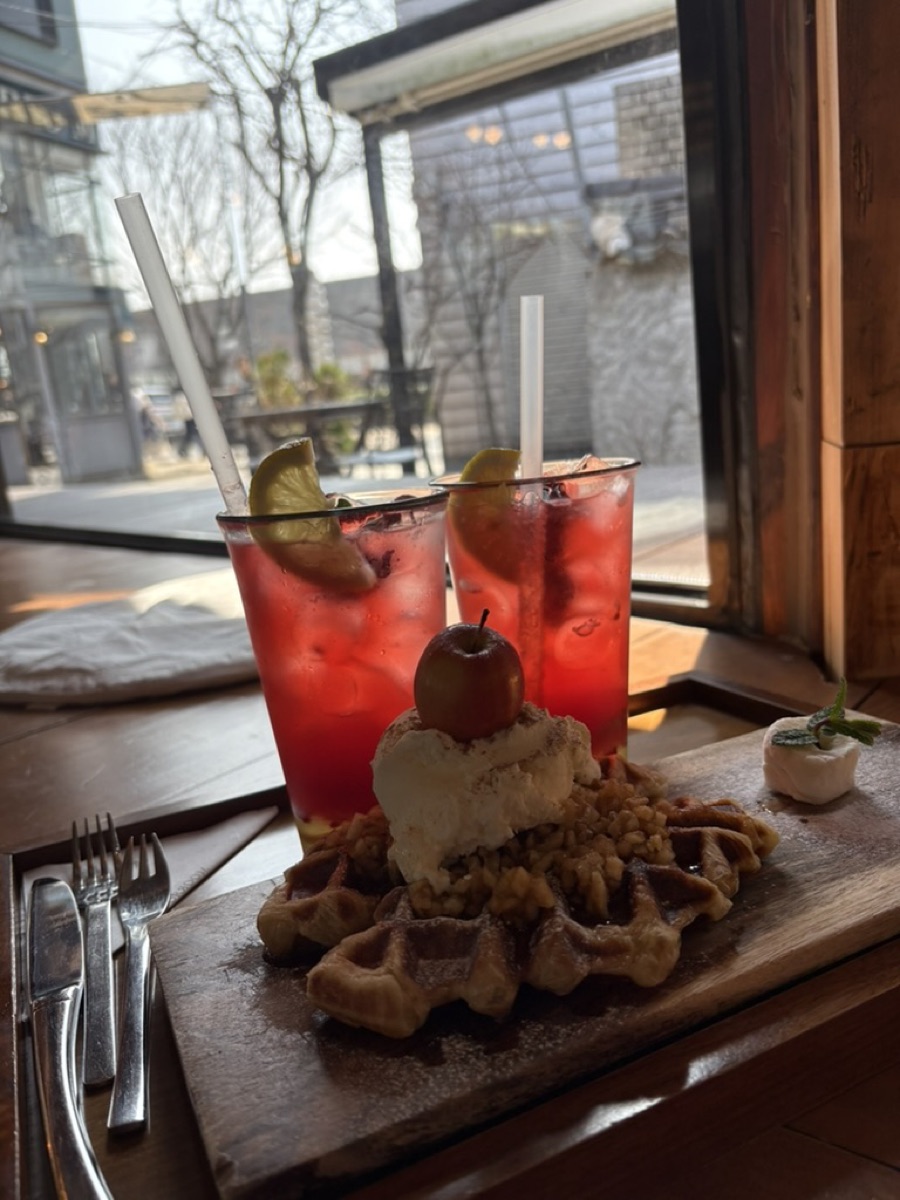
The cake displays alone are an event — our two pressed their noses to the glass at every Twosome Place we passed. Beyond cakes, look for waffles piled with cream and fruit, toasties, and bingsu (shaved-ice dessert) in warmer weather. It’s all reliably mild, and it’s the easiest “yes” of the day.
Practical Tips for Eating Out with Kids
A few things we worked out along the way:
- Water and side dishes are free. Most meals come with water and a spread of banchan (small sides) automatically — some mild, some spicy, so let kids try the non-red ones cautiously.
- Scissors at the table are normal. Servers cut meat and noodles with kitchen scissors, which is handy for portioning a child’s plate.
- High chairs are hit and miss. Casual and family restaurants usually have them; smaller traditional spots often don’t.
- Lunchtime queues near the sights are real. Restaurants around the palaces and Bukchon fill fast at midday — eat early or eat before you arrive.
- Carry a snack. A tuna-mayo gimbap or a bakery bun in the bag headed off the worst of the hangry meltdowns.
Common Questions
Is Korean food too spicy for kids? It can genuinely be a challenge, especially for spice-sensitive kids. Spicy red sauce turns up in a lot of dishes — sometimes even ones aimed at children — so you can’t assume a kids’ menu means mild. The upside is that the safe options are reliable and everywhere: dumplings, katsu, bibimbap (minus the vegetables), Korean BBQ, plain rice, bakeries, and Western chains. We ate well, but we leaned on a small rotation of dishes we knew were safe.
What Korean food will picky eaters eat? Our daily winner was dumplings (mandu) — non-spicy, in soup or fried, and both kids loved them. Beyond that: katsudon, bibimbap (rice, meat, and sauce — vegetables picked out), plain rice, tuna-mayo gimbap, Korean BBQ, and fruit. When all else failed, there was always a bakery or a McDonald’s nearby.
Can you get non-spicy food at Korean convenience stores? Yes, but read the labels — not every triangle gimbap is mild. The kimchi and spicy-pork fillings are common, so look for tuna-mayo (chamchi) or plain options, plus sandwiches, bakery items, fruit, and milk.
Are there bakeries and Western food in Korea for kids? Loads. Beautiful bakeries are everywhere and our kids adored them — just watch for unfamiliar fillings like sweet potato or chewy red-bean, which caught ours out. Western chains like McDonald’s and Krispy Kreme are everywhere too, and we used them without guilt on the harder days. One catch: local pizza isn’t automatically safe — ours in Busan had different-flavored dough and distinctly Korean toppings, cheese, and sauce, and neither kid ate it. An actual Western chain branch is the safer bet.
Is Korean BBQ good for young kids? Yes — one of our best meals. The grilled meat is mild, the tabletop cooking is a show kids love, and you can ask for plain rice and lettuce on the side. Just keep the spicy dipping sauces away from sensitive eaters.
Would I worry about feeding picky kids in Korea again? Honestly, less than I did the first time. Yes, the spice caught our daughter out more than once, and yes, we ate a lot of the same few things. But our son — the one I’d actually worried about — found his safe zone in dumplings and bakeries fast, and on the days it all got too much, a familiar yellow M was never far away. You’ll find your rotation faster than you think — and then it’s easy.
We ate our way across Seoul and Busan in late March to early April with a 4 and 6 year old. For the full trip, see our 10-day South Korea itinerary with kids and our guide to the best areas to stay in Seoul with kids. Heading to Busan? Here’s 4 days in Busan with kids.